


To clean a hairbrush: (1) remove trapped hair with a comb or scissors, (2) swish the bristles in warm water with a few drops of gentle shampoo and scrub between rows with an old toothbrush, (3) rinse and leave to dry bristle-side down on a towel overnight.
That's the whole method. Below: the detail that makes it work, what to change for wooden and natural-bristle brushes, and the mistakes that shorten a brush's life.
WHY BOTHER?
Your brush collects everything your hair carries: shed strands, dead skin cells, natural oils, product residue and household dust — the ingredients of that grey fuzz packed into every well-used brush. Left in place, this buildup gets redeposited onto clean hair with every stroke, holds onto bacteria, and drags against bristles so the brush detangles worse. Cleaning it is a five-minute job that supports everything else in your scalp health routine.
STEP 1 — REMOVE THE HAIR (AFTER EVERY FEW USES)
Work the tail of a comb, a pintail brush handle or a pen under the trapped hair at the base of the bristles and lift it out in sections. For stubborn matting, snip carefully down the middle of the wad with scissors — cutting across the fuzz, never towards the brush pad — then lift the halves free. Doing this little-and-often is the single biggest factor in how clean your brush stays.
STEP 2 — WASH THE BRISTLES (EVERY 1–2 WEEKS)
- Fill a basin with warm (not hot) water and add two or three drops of gentle shampoo — hair product for a hair tool; no bleach or strong detergent needed.
- Hold the brush bristle-side down and swish vigorously for 30–60 seconds. For a plastic-bodied brush, a 10-minute soak is fine and loosens compacted residue.
- Scrub between the bristle rows with an old toothbrush, working from the base outward. This is where oil and dry-shampoo residue hides.
STEP 3 — RINSE AND DRY
Rinse under warm running water until it runs clear, shake off the excess, and leave the brush bristle-side down on a dry towel overnight. Drying face-down lets water drain out of the cushion vent rather than pooling inside the pad — trapped moisture is how brushes end up musty.
ADJUST FOR YOUR BRUSH TYPE
Cushioned plastic/nylon brushes (most paddle and vented styles): the full method above, soak included. See our guides to paddle brushes and vented brushes for choosing between them.
Wooden-bodied brushes: never soak. Water swells and splits wood and lifts varnish. Dip only the bristles, keep the body dry, wipe it with a barely damp cloth, and dry face-down immediately.
Boar and natural bristle: as with wood — bristles only, brief contact with water, thorough face-down drying. Natural bristle holds moisture longer, so give it a full 24 hours.
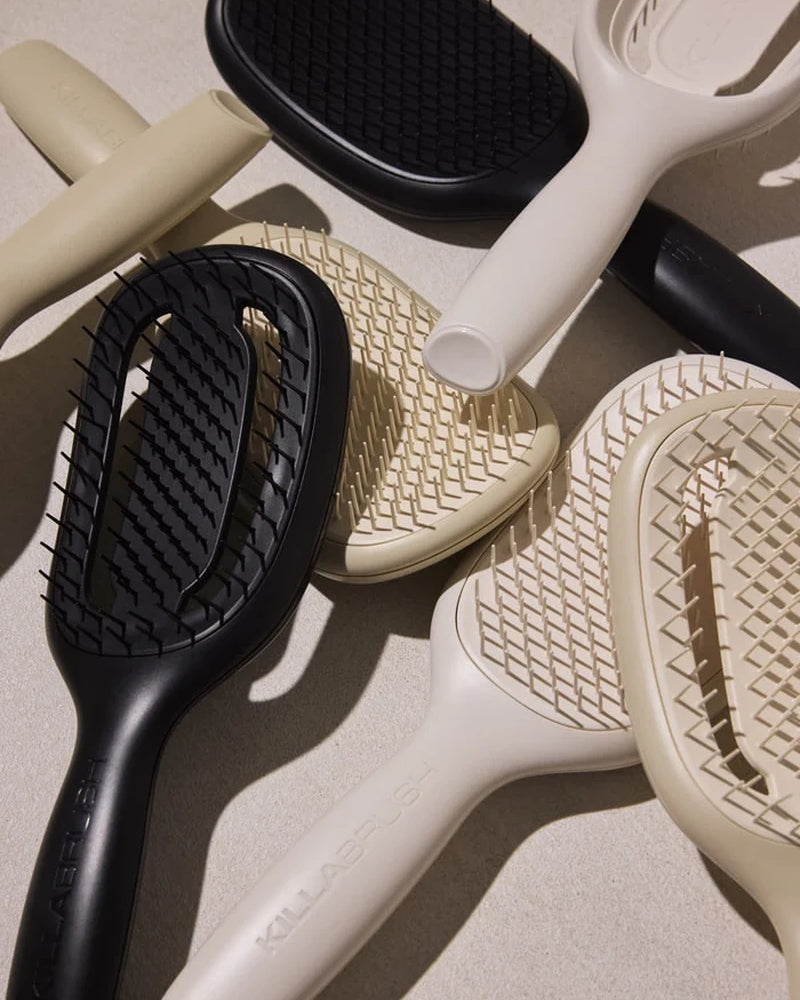
KILLABRUSH antibacterial brushes: clean exactly as above. The antimicrobial technology is engineered into the bristle material itself, not applied as a coating, so routine washing doesn't wash it away — it keeps working between cleans, clinically
tested to eliminate up to 99.9% of surface bacteria on the brush. A cleaner tool with less effort, not a tool that never needs cleaning. Explore the range →
MISTAKES THAT RUIN BRUSHES
Boiling water (warps plastic, loosens glued pads), soaking wooden handles, using conditioner in the wash water (adds residue rather than removing it), drying bristle-side up (pools water in the cushion), and storing the brush damp in a washbag (the mould scenario). And if bristles are bent, snapped or missing, cleaning won't resurrect it — see when to replace your brush.